Thursday, August 16, 2012

Exploring Connecticut - Chester-Hadlyme Ferry Part 1

In 1769 John Warner built a ferry that traversed the Connecticut River between Chester on the west side and Hadlyme on the east side.

More than 100 years earlier two ferries had been built, one in 1662 to the south between Old Saybrook and Old Lyme and the other several miles upstream in 1664 between Haddam and East Haddam.

Warner's Ferry later carted supplies across the Connecticut River during the American Revolution which was a flat-bottomed scow powered by men using long poles.  I can only imagine who and what used that ferry during that period.

Essex-Lyme Ferry
- Essex Historical Society and the Treasures of Connecticut Libraries
A steam-powered ferry was put in service around 1877.  I could find no photos of any of the historical Chester-Hadlyme ferries, unfortunately.

The Essex Lyme Ferry pictured left gives us an idea of ferry construction in the late 1700's.  If time travel were possible I would love to spend a few weeks in Connecticut during this time period. 

Ferry Boats a Way of Life in Early Connecticut

Today, the Chester-Hadlyme Ferry still provides an important service.  Those of us who live in this area know that there are limited ways to cross the Connecticut River.  Far to the north in Middletown-Portland is the Arrigoni Bridge and far to the south is the Old Lyme Bridge.

One evening as I was returning from Old Saybrook, I arrived at the East Haddam Swing Bridge area and a long line of cars.  This is not unusual as it takes about 10 minutes for the bridge to open and close resulting in long lines of cars on both sides of the Connecticut River.  On this day, however, the bridge did not reopen.

I was actually able to see the bridge from where I stopped and could see smoke and a boat beneath.  My daughter and I decided to have dinner at Haddam Pizza while we waited for the bridge to be repaired and reopen but as time went on, dinner was finished, the bridge did not reopen.

Chester-Hadlyme Ferry
Our choices were 18 miles to the north, 20 miles to the south or the Chester-Hadlyme Ferry.  Because I had waited so long the ferry had a long line as well so we just drove down to Old Saybrook, got on I-95 and crossed in Old Lyme then headed back up on Route 156.

One time years before the bridge was closed for some unknown reason and because I had a car full of young children I immediately drove down to the Chester-Hadlyme Ferry.  Within minutes there was a long line of cars behind me.  For $3.00 we crossed the Connecticut River in our mini-van.  It was my first and only ferry crossing.

The State of Connecticut threatened to close the ferry permanently in 2011 due to budget cuts, but the uproar of opposition stopped that plan.  Really, find somewhere else to cut costs.  Removing one of only three ways to cross the Connecticut River in a 40-mile range is just silly.

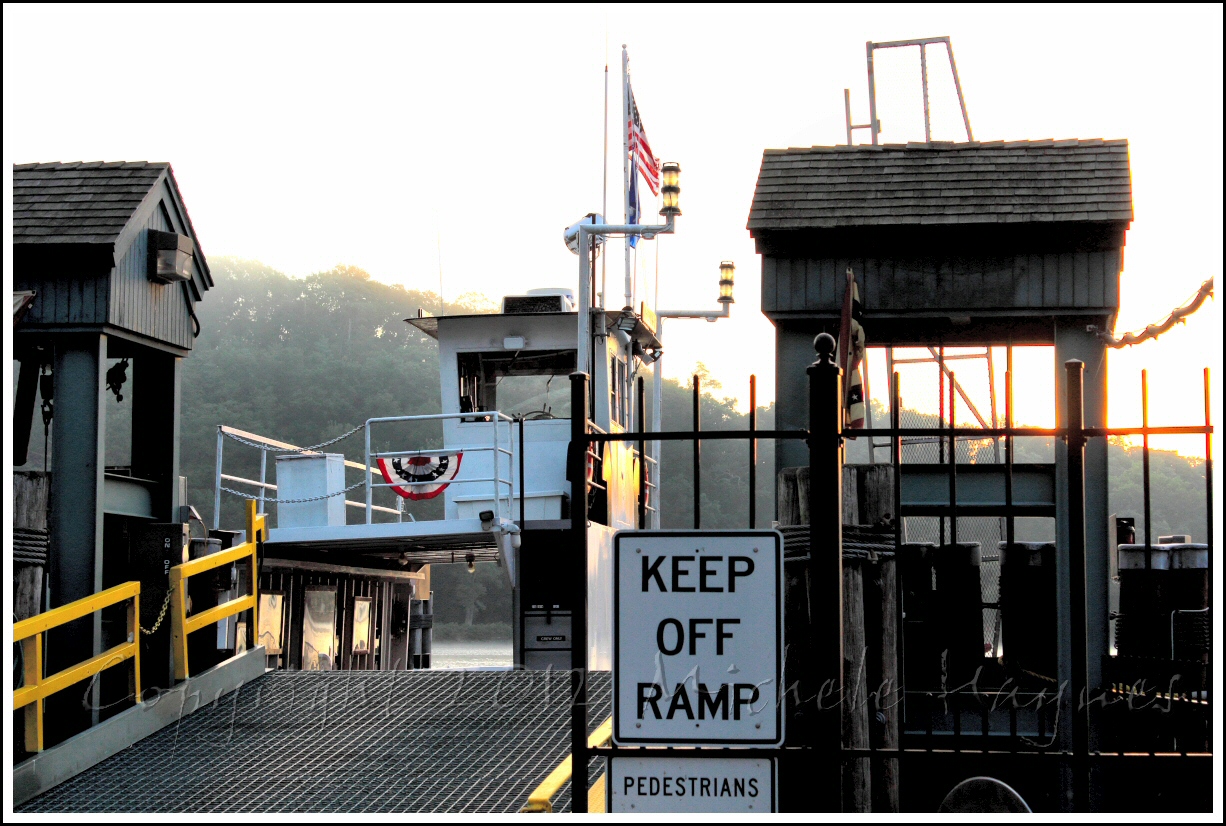
Sunrise at Chester-Hadlyme Ferry on Connecticut River
I plan to photograph the east side of the Chester-Hadlyme Ferry at sunset next time. Stay tuned.

Wednesday, August 15, 2012

Being a Cheerleader

Chester-Hadlyme Ferry at Sunrise -- Connecticut River
I sat down prepared to create a post with some of the photos I took yesterday at the Chester Ferry.  I love sunrise.  It is so quiet.  It is soft.  It is relaxing.  I wanted to share that mood, that feeling with all of you.

But then I saw a Facebook friend posted something that said this:

Student says,  "I am very discouraged.  What should I do?"

Master says,  "Encourage others."

Then I knew what I wanted to write about today: my apparent purpose in life, at least for now.

I am chronically ill.  I cannot work (at a real job making real money -- you know, like drive somewhere, perform tasks for money, drive home and perform tasks for no money).

I struggled with feeling useless for a long time.  I did work part-time for nearly a year a couple of years ago but it completely drained me leaving me with absolutely no energy to care for my family.  And I am the only caregiver of my family.  I am the only one here day after day, involved, caring for my children, adult and minor alike.

Many of you know that I have children with labels.  Some of those labels include ADHD, bipolar disorder, borderline Asperger's Syndrome, depression, even physical illness.  Some of the other labels include genius, brilliant, creative, innovative, and special. 

Living with labels means that nothing is simple.  Nothing is easy.  Nothing goes smoothly around here.  

Living with geniuses means that nothing is simple.  Nothing is easy.  Nothing goes smoothly around here.  

Yep, those good and bad labels produce similar circumstances, an atmosphere of challenge, so to speak.  Or maybe I should say "positive" and "negative" labels.  Lots of people would love to have a child with a genius IQ.  Many parents start pumping that grey matter to inflate its capability starting when their children are babes in arms.  No parents wish their children were ADHD, bi-polar or Autistic.  

Parenting children like mine has molded me.  When I was younger I often bordered on the morose, so completely introspective, so withdrawn.  I saw a lot of darkness.  I didn't see a lot of light.  I knew it was there, though.  I remember finding good in nature, literature, and creativity when life was not so nice.  I have always had this capability.  I am an independent soul who enjoys isolation, thinking my own thoughts, and yes, doing my own thing.  

And then I had children.

Children demand our whole beings pay attention to them.  Usually we embrace this new paradigm for life, one in which the self goes to the back seat while the self-less emerges dominant.  Most of the time we do not complain (okay, sometimes at 3 in the morning when a teething baby was in pain and making her discomfort known so emphatically I complained a little).  As time goes on we are molded by our parenting duties.  We are molded into different people by the needs of our offspring.  

When those children have "special needs" this molding moves to a whole different level.  Those around us also mold us.  They often push us away.  We must be bad parents.  We must be doing something wrong.  We must have bad dna.  Whatever.  Isolation becomes a safe place.

Then something miraculous happens:  we meet other parents of other challenging children.  We begin to share stories.  We begin to open up a little.  We find that sometimes it is safe to be a parent of challenging children around others.  We also learn how to support our children while we are, for the first time, receiving support from others (yes, parenting a special needs child is not easy -- in case you didn't know).

I have been parenting for 35 years now.  Whew!  That is a long time.  And I am still parenting.  Not the 35-year-old: he has life figured out for himself, his wife and his daughter (as much as we can ever figure out life).  But I am still very involved in the lives of the other five ages 22, 20, 19, 16 and 12.  

When one of my children becomes absolutely and completely discouraged I become their cheerleader.

"You can do it!"

"Yes, you can!"

"You can do it!"

"I know you can!!!"

In the case of bipolar disorder discouraged can quickly spiral into suicidal.  Being a cheerleader in the life of a bipolar person reaches an entirely different level.  

In the case of someone with Asperger's Syndrome being a cheerleader usually means encouraging them to keep learning those pesky social skills.  I am not the best myself in the area of social skills.  I would rather not even need them.  Just leave me alone to think, write, take pictures, be creative.  But I do understand them and can use them when necessary. 

Parenting a musical genius who is chronically ill is my greatest challenge right now.  I am not doing very well at this point.  I am trying, though, and constantly reassess my skills and abilities.

I am not a warm and fuzzy mom after the kids reach a certain age.  I am more of a "get it together and grow up!" kind of person.  Yes, it is true.  I hang my head in shame sometimes at my lack of mothering instincts once kids reach the teenager years, but I have been raising five boys for a long, long time, and they do not invite warm and fuzzy.  [I did live with a lot of criticism of my parenting abilities throughout my marriage which I believe affected my mothering instincts, sadly.] My job is to teach my children to be independent, strong people who can handle anything life throws at them.  This is not a warm and fuzzy job.  It is, however, a job for a cheerleader!

I don't tell my adult children what to do.  I do try to encourage them to find solutions to life's problems.  One thing my children know: I love them and I am there for them.  Sometimes I do throw a little tough love at them, and sometimes I pull away a little, like letting go of your children when they are learning to ride a bike, and let them flounder a bit.  They might feel as though I don't care but the absolute opposite is true.  I care so much it hurts.  I cry for my children.  They don't see me cry, but I do.  Their struggles threaten to destroy me sometimes I feel their pain so deeply within me.  Sometimes Mama Bear mode kicks in and I could scratch out the eyes of anyone who threatens my babies, though this is an internal struggle, not one that materializes or is even obvious to those around me.

My children have not had it easy.  They have had it real hard as a matter of fact.  The last 6 years have been brutal. Many of the adults in their lives have let them down.  

Each morning I wake up it starts with a new day of cheering one after another of my children on.  And I have come to accept this as my role, as my purpose right now.  And you know what? That's okay.  I'm okay with that. 


Monday, August 13, 2012

Food has become precious

19yo working on new firewood storage base
Something has happened to me and my children over the past few months.  We have learned how very precious food is to us.

Because of circumstances beyond my control my food budget has been reduced to about $400 a month. USAA recently reported that the average monthly food costs for a family of four (two adults and two children) is over $1000 a month.  I live in one of the more expensive places for food.

We have learned to appreciate food.  Corresponding to a small food budget I have become aware of GMO's (genetically modified organisms) in the US food supply.  They are everywhere and would require at least three separate posts to explain.  Suffice it to say that since my 16yo and I have been ill for a long time now with no medical help from the medical community in sight, I am looking to lifestyle, diet, environment for answers.  I am trying to avoid GMO ingredients.

Homemade whole wheat flatbread
This leaves us with plain food.  Nothing that comes from a box.  Okay, we can maybe eat pasta but we aren't really even eating much of that.  What do we eat?

  • Organic dairy products such as yogurt and milk
  • Organic grains such as oatmeal and flour which we cook from scratch into hot cereal and breads
  • Fresh local fruits and vegetables, some grown in my own garden
  • Fresh meat cooked into meals from scratch or preserved
  • Plenty of good fats (lard, olive oil, butter)
  • Homemade salad dressings and marinades
  • Scratch desserts
Our pantry and refrigerator look virtually empty.  My kids balked and complained at first.  My 16yo, who is already very skinny lost 16 pounds (he has since gained this back).  My 19yo has slimmed down quite a bit.  My 12yo and I are losing weight.  If we are hungry we grab a fresh peach or slice up a home-grown cucumber and eat that.  The boys make single bowls of organic oatmeal at least once a day for breakfast or a snack.  We eat a lot of eggs and cheese and yogurt.  We eat a lot of vegetarian meals.  We have organic popcorn for snacks. 

My first garden in years has been fairly successful but has not provided a lot of food for the size of this family.  My kids love veggies so there are never enough.  The main problem with my garden spaces was a lack of sun.  They got between 6-8 hours a day when they needed at least 12-14.  We were going to take down some trees around the perimeter of the yard but the chainsaw broke with no funds to replace it.  We made do.

If I am still here next year those trees are coming down.  It is a necessity.  The secondary reason for the trees is that we have a wood boiler in this house.  It is connected to and right beside the oil boiler and heats the house and our water using wood.  I wanted those trees for firewood to heat the house and save money on heating oil which has become outrageous at $3.49-3.79 a gallon. 

So here I am with a single zucchini that took me 2 months to grow and I need to feed four people.  That zucchini is mighty precious.  I feel like bronzing it, to be honest.  I know how much work that single zucchini was for me and my kids.  My 19yo dug that front yard garden for me this year.  He knows how precious that zucchini is to all of us. 

What do you do with a single zucchini?  You start by slicing an onion and green pepper you bought at the farmer's market from a local independent farmer.  Throw those in the big cast iron skillet with a spoonful of lard and start them sauteeing.  Then I slice that most amazing, precious zucchini along with a yellow squash I bought from that same local independent farmer at the farmer's market and throw those in the pan.  I sprinkle the whole mess with a little salt and cook until the squash is just barely tender.  I serve my most precious zucchini and other veggies over organic brown rice (that took 50 minutes to cook).  I watch as my kids moan in delight at the flavors that they never knew until this summer.  Food has become precious to them. 

They are tasting real food without all of the additives, preservatives and sprayed on vitamins.  They help me pick out those fruits and vegetables from the farmer's market stand.  They carry those heavy treasures because there are no shopping baskets at the farmer's market.  You use your own muscle power to carry your food.  They help me bring the foods into the house and oftentimes help me prepare them.  They see me mix up a batch of bread or stand over the stove for an hour making fresh tortillas.  They see that pot of black beans on the stove all day long.  They smell it cooking and can't wait to taste it. 

They have helped with the garden and seen how much work it is to grow food.  When we get one cucumber at a time that cucumber has to be divided up and shared among four people.  You don't get a lot of food sometimes.  You certainly don't have food that you just grab out of a bag or box and stuff your face with mindlessly.  When they are lucky there is homemade jerky in the pantry or fridge for a quick protein snack.  But not always.

My children are not starving.  Actually, I think they are getting much more nutrition now that we have a lot less food.  Because what they eat is packed with natural nutrition, not added, sprayed on or "enriched".

We still get the occasional take-out Chinese (last time 19yo treated us) or pizza (22yo treated us on Saturday).  And we really enjoy those meals.  But even those foods are more precious to us. 

Even though this journey hasn't been fun, and our stomachs growl sometimes (mostly because we are too lazy to go make something that we know will take time), I think we are much better off now than before.  We certainly appreciate good food, real food, nutritious food.  Food is so very precious to us now.


Lazy Days -- we all need them

Yesterday I overdid.  I awakened around 4:30 a.m. but stayed in bed until 5:30 a.m.  I took photos in the morning, came home and processed some of them, then ran out to the farmer's market.  I always park away from the maddening crowd when I go there; just a short walk, but a walk, nonetheless.  Since The Local Beet food co-op is right there I picked up a few items.  Why was everything I bought yesterday heavy? Three-pound jar of raw honey, two pounds of peaches, three pounds of onions, a pound of bulk brown rice, two dozen cage-free eggs (those eggs never had to live in a cage EVER). 

When I was done I realized that I had to walk back to my car a few blocks away.  Next time I will insist one of the boys come with me.  I sure could have used their muscle.  I made it to my car then had to stop by the market for something for dinner.  Picked up a cheap cut of London broil, and I am on my way home.

I know it doesn't sound like much, but that was just too much for one day and my body started protesting. 


When I got home I needed to slice and marinade the meat.  Done.  For a late lunch I put on a pot of rice to cook while I started sauteeing vegetables.  Then I started a batch of bread for steak sandwiches.

Rice and veggies all done we chowed down.  My 16yo asked me what I put in the rice after saying how delicious it was.  "Salt," I responded.  We both laughed and enjoyed our lunches: sauteed onions, green peppers, zucchini and yellow squash over brown rice.  Yummy. 

I got a little break while the bread was rising so I knitted and watched Heroes on Netflix.  I started sliced onions in the skillet for steak sandwiches (I prefer the slow carmelization method -- lard, onions, med-low heat for about 30 minutes).  I was so tired at this point that I assigned stirring onion duty to 16yo.  I divided and formed my two loaves of bread and put them in my 9x13 glass baking dish.  This is my new favorite way to bake bread.  It makes two long, lower loaves resulting in smaller slices of bread for sandwiches and garlic bread.  I baked them for 35 minutes at 400 degrees F. 

As soon as the bread came out of the oven I threw the steak in the pan and cooked on high heat for a couple of minutes.  I took the meat out of the pan, allowed the water from the marinade to evaporate and threw the meat back in for a quick brown.

Dinner was served: steak, sauteed onions on homemade bread.  Oh, we had snacked on cucumbers before dinner so we didn't have a separate veggie dish.  There were no complaints.  I was asleep in the chair by 7 pm.  I tried to stay up later but finally dragged myself to bed at 8:05 pm. 

Today I need a rest so it is a declared lazy day. 

Sunday, August 12, 2012

Machimoodus State Park


Equipment shed at Machimoodus State Park
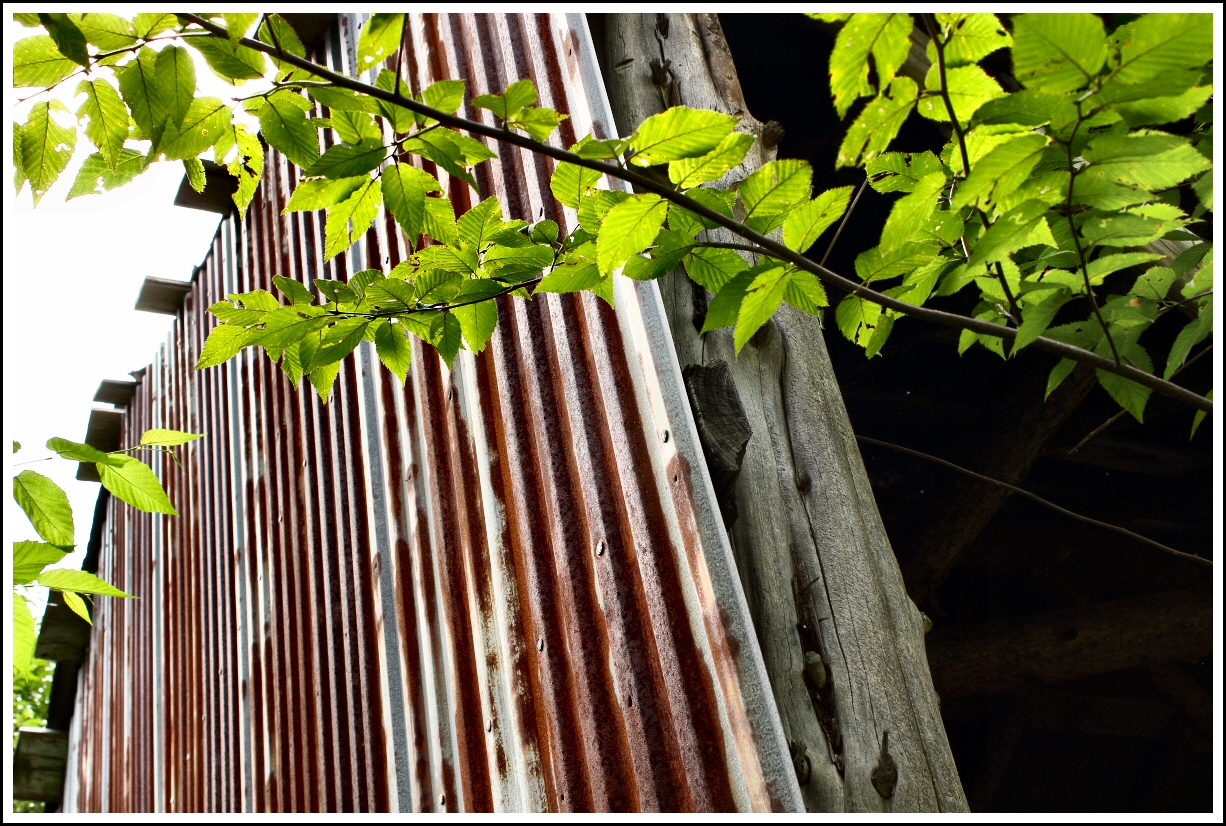
Unique construction using whole trees and metal panels
Love the light coming through -- needs repairs
Vines, poison ivy and Asiatic bittersweet
Invasive Japanese honeysuckle Lonicera japonica Thunb.

Red-stemmed milkweed pod

Common mullein first year's growth

Due to two days of fairly heavy rains today was the first time I was able to revisit Machimoodus State Park.  The sky was brooding when I arrived and stayed that way until I had packed up and was driving out of the park.  That is when the sun peaked out for a quick look.

 This time I had my tripod and a clean lens.  Since it was sprinkling on and off I also carried my huge Ikea umbrella which came in handy to keep moisture off of my camera and as a wind block.  The wind always seemed to kick up any time I tried to take a closeup of a flower on a long stem.  

Mushroom dinner for slugs

unknown mushroom whose stem was below the soil line
Wild carrot flowers are spectacular


Friday, August 10, 2012

Connecticut Native and Not-So-Native Plants

First a little background before I share a little bit about my morning explore. Connecticut, as are all other states in the contiguous 48 states, is struggling with invasive plants.  Last spring I attended a workshop in my town sponsored by UConn.  This was my first exposure to invasive plants other than hearing about the spread of  Lythrum salicaria or Purple Loosestrife a few years ago.

Because I think of him as Nature Boy, I brought my 12-year-old son.  As I figured, he was fascinated and drank up everything he could.  He loves to explore, often can be seen with a pair of binoculars stuck to his face, and could grow up to be a biologist or environmental engineer.

After a little talk about what invasive species were, we were led on a tour of the senior center's property where invasive species were identified and explained.  Because it was still very early in the spring many of the invasives that Connecticut struggles with had not yet appeared.  Regardless, it was an introduction and a starting place.

Over the next few weeks I began walking my property.  I mostly found Celastruc orbiculatus or Oriental Bittersweet and, of course, my 50 Winged Euonymus Euonymus alatus shrubs which provided a privacy screen along my very long driveway.

Although it was an excruciating decision, I chose to cut down all of the Winged Euonymus shrubs.  I will miss the fall color with which they greeted me each time I came home from running errands, but my conscience is clear -- no new plants would grow because of my shrubs.  I am hoping to replace them with Redtwig Dogwoods.

If anyone is interested in learning to identify and manage invasive species here are some links:

Connecticut Invasive Plant Working Group
National Invasive Species Information Center
Invasive Species State Resources
USGS Invasive Species Program

Now for my morning.  Before jumping in the car to take my son to work I grabbed my camera and tripod.  Driving back I decided to stop off at a fairly new state park area in a nearby town.  The state purchased part of a much larger family farm a few years ago so it made a perfect park.  A lot of the land was already cleared for raising beef cattle, there were a couple of nice ponds and old dirt roads became walking trails.


Arriving at the park I am the only visitor.  This is quite common for weekday mornings.  Grabbing my Kimber PepperBlaster II I began putting my camera gear together.  I remove my tripod and then my camera, go to attach my camera to the tripod and find the tripod mount is not on my camera.  Okay, now I am not happy.  One of my sons used my camera but did not put the tripod mount back on when they were finished.  I almost just pack back up and head home.  Nope.  I am already here.  I'll just walk around a bit and see what I can capture.  I need the tripod because I am very shaky.  I can't even stand straight without weaving a bit.  Forget about steady hands.  Typically, my handheld shots are at best just not sharp.  Most are downright blurry.

Just a few feet from my car I was thrilled to see an area that was allowed to grow wild with native flowers and herbs.


I know this doesn't look like much but there are some real treasures in there.  Most exciting was the mullein, center, tall spiky flower stalks. 

Then pan left and there was this beautiful patch of what I thought were white flowers but during post-processing discovered they are a very light purple. Sorry, but I do not know what they are yet.


Moving down the trail a bit I attempted to capture closeups of some flowers and grasses but they just did not turn out well.

Then I reached a huge field and pond as I moved towards the river.  More mullein, grasses that had fallen over to create a soft carpet, and many more wild carrots and some plants that I could not identify.

Common mullein
One of my favorite herbs is mullein.  It has anti-inflammatory and expectorant properties.  Let me put it this way: if you have a stuffy head, hold a cup of mullein tea, inhale deeply and your nasal passages will miraculously clear enough so you can breathe again.  Additionally, it will loosen and help you clear out mucous (you need to drink it for this to happen -- it tastes like mint).  This herb tea is especially amazing at dealing with sinus infections.  A Neti pot and a few cups of mullein tea is all you need to cure that infection.

Milkweed
At first glance, this would look like a huge patch of Dogbane.  Red stems usually means Dogbane.  And that is what I thought. Although Dogbane usually has a few smaller branches reaching out from the main stem.  What convinced me were the pods (see below).

Milkweed -- but what variety?

Unlike Common Milkweed, the pods above are not dangling from a curved stem but closely attached to the main stem. 

Milkweed


In the same field I found a few of these plants (below) that I thought at the time might be in the nightshade family.  Once I got home I discovered that they were not any nightshades that came up when I searched and included Connecticut in the field.


The leaves are not in great shape and I didn't get enough photos of the leaves themselves so I will go back this afternoon or tomorrow with my tripod (and mount) and take more photos to aid in identification.


The plant to the right is definitely in the nightshade family.  Classic flower style but not the invasive Bittersweet nightshade Solanum dulcamara.

The flower looks very similar to Mullein nightshade Solanum donianum but the leaves are completely different.

I believe this might be a White Nightshade Solanum douglasii.  Again, the leaves are not quite right.

More photos especially with closeups of the leaves are required.

Black locust - Robinia pseudoacacia L. Invasive tree
To the left is a Black locust tree which is on the invasive species list here in Connecticut.

This tree was in a line of obviously planted trees along with some saplings in the field nearby. 

When I find an invasive species like this I record the location, try to take a few photos and then will report it to the State of Connecticut.  This tree needs to be removed as do the saplings nearby. 

And finally, I will leave you with this picture from my morning explore.  I will take more pictures of this structure, also.  The construction is quite unique.  Huge dirty spot on my lens and no lens cloth ended my photo explore. 

Equipment shed


Tuesday, August 7, 2012

Turned cool, thankfully . . . or not

It has been very, very warm for New England.  Hot and humid.  Thank God for those window units that still work.  And lots of fans.  We have survived.

Last night I went out on the deck to try to find one of my cats (they must come in at night or they could become a meal for coyotes) and was shocked to find it in the 60's.  Oh, it was so refreshing.  Yes, to a person it feels wonderful.  To a squash or cucumber plant it means almost coming to a standstill in growth.

This morning is it 58.4 degrees Farenheit at 6:15 a.m.  Brrrr.  I am not complaining for me.  It is delightful.  But I want more squash, cucumbers and tomatoes.  Strangely enough, August in Connecticut tends to be cooler than July, the opposite of the southern states.  In Texas or Florida, August is usually the hottest, and I mean scorching hot, month.

Sugar pumpkin turning beautiful orange.  Look closely at the bottom of the picture.


With those cooler, fallish temperatures it makes more sense to have my first Sugar Pumpkin begin to turn orange.  What a gorgeous contrast between the green and orange.  And if you look closely at the picture, what do you see beneath that pumpkin?

Joey's pumpkin

See Joey's pumpkin? This is pumpkin number two what is growing on the fencing.  And boy how it has grown.

Joey's pumpkin


Did you know that if you scratch a child's name on a growing pumpkin it scabs over?  When the pumpkin is ready it has the child's name in light brown against the orange outer skin?  I took a nail to Joey's pumpkin on Saturday.  I took this picture yesterday (Monday) and it was already scabbing over.  This morning it is much more pronounced.

Pumpkin blossom

I have taken at least 50 shots of pumpkin flowers but this is my favorite.  The color is so intense as though the vine sends up a big party platform declaring, "sweet nectar for all!!!"  The stamen is huge (though not captured in this shot) as though it was designed for blind bees, or those who accidentally stumble upon this giant flower.

Moskovich tomato plant

The tip of my Moskovich tomato (driveway container garden) reaching for the heavens, soaking in a shower of rays from the hot sun.  

Have a wonderful Tuesday!